
This study aims to define a proper process of a Badminton-specific warm-up, which helps a player perform well in tournaments and achieve better results with appropriate injury management. Badminton players need speed, agility, endurance, and strength to cover the court quickly, react to shots, and maintain a high level of play throughout a match. This analysis reviews the player's performance with a designed warm-up process. A well-planned warm-up has the potential to not only prepare athletes physically and mentally but also possess the ability to reduce the likelihood of injury and improve performance, highlighting its significant importance in HYPERLINK "https://www.scienceforsport.com/how-sporting-parents-can-ensure-they-give-their-kids-the-best-chance-of-sporting-success/" \h athletic development. General warm-up specifically targets increasing body temperature and heart rate, which only involves basic body movements. Specific warm-ups target a particular muscle group and movements related to the activity. Concisely, a general warm-up is a broader preparation, while a specific warm-up is tailored to a certain activity. So, there is a need for sports specific warm-up programs. This approach of defined step-by-step warm-up procedures will help players in their performance and develop a standard procedure for the warm-up. As per the data collected during the analysis, the designed warm-up program showed better results in the performance of badminton players.
| Published in | Medicine and Health Sciences (Volume 1, Issue 1) |
| DOI | 10.11648/j.mhs.20250101.13 |
| Page(s) | 14-22 |
| Creative Commons |
This is an Open Access article, distributed under the terms of the Creative Commons Attribution 4.0 International License (http://creativecommons.org/licenses/by/4.0/), which permits unrestricted use, distribution and reproduction in any medium or format, provided the original work is properly cited. |
| Copyright |
Copyright © The Author(s), 2025. Published by Science Publishing Group |
Physical Conditioning, Dynamic Stretching, Specific Warm-up, Reaction Time
Gender | Weight (in Kg) | Frequency | Height (cm) | Frequency |
|---|---|---|---|---|
Male | Below 40 kg | 11 | Below 145 cm | 2 |
40-50 kg | 18 | 146-155 cm | 4 | |
51-60 kg | 12 | 156-165 cm | 15 | |
61-70 kg | 9 | 166-175 cm | 20 | |
Above 70 kg | 10 | Above 175 cm | 19 | |
Female | Below 40 kg | 6 | Below 145 cm | 1 |
40-50 kg | 8 | 146-155 cm | 8 | |
51-60 kg | 9 | 156-165 cm | 15 | |
61-70 kg | 10 | 166-175 cm | 14 | |
Above 70 kg | 7 | Above 75 cm | 2 |
Male (N=60) | VE | E | A | RE | NE | |||||
|---|---|---|---|---|---|---|---|---|---|---|
F | % | F | % | F | % | F | % | F | % | |
Reflexes | 10 | 16.6 | 12 | 20 | 16 | 26.6 | 12 | 20 | 10 | 16.6 |
Coordination | 10 | 16.6 | 12 | 20 | 12 | 20 | 14 | 23.3 | 12 | 20 |
Injury | 20 | 33.3 | 12 | 20 | 10 | 16.6 | 10 | 16.6 | 12 | 20 |
Flexibility | 10 | 16.6 | 10 | 16.6 | 16 | 26.6 | 12 | 20 | 12 | 20 |
Recovery | 10 | 16.6 | 12 | 20 | 14 | 23.3 | 18 | 30 | 12 | 20 |
Confidence | 16 | 26.6 | 14 | 23.3 | 10 | 16.6 | 10 | 16.6 | 12 | 20 |
Female (N=40) | VE | E | A | RE | NE | |||||
|---|---|---|---|---|---|---|---|---|---|---|
F | % | F | % | F | % | F | % | F | % | |
Reflexes | 6 | 15 | 8 | 20 | 10 | 25 | 8 | 20 | 8 | 20 |
Coordination | 8 | 20 | 8 | 20 | 10 | 25 | 8 | 20 | 6 | 15 |
Injury | 16 | 40 | 8 | 20 | 6 | 15 | 4 | 10 | 10 | 25 |
Flexibility | 12 | 30 | 8 | 20 | 6 | 15 | 4 | 10 | 10 | 25 |
Recovery | 8 | 20 | 10 | 25 | 6 | 15 | 8 | 20 | 8 | 20 |
Confidence | 8 | 20 | 12 | 30 | 6 | 15 | 6 | 30 | 8 | 20 |
Participant (N=100) | Very Effective (VE) | ||
|---|---|---|---|
N | Mean | ±SD | |
Reflexes | 16 | 8 | 2.8 |
Coordination | 18 | 9 | 1.4 |
Injury | 36 | 18 | 2.8 |
Flexibility | 22 | 11 | 1.4 |
Recovery | 18 | 9 | 1.4 |
Confidence | 24 | 12 | 5.6 |
Participant (N=50) | Effective (E) | ||
|---|---|---|---|
N | Mean | ±SD | |
Reflexes | 20 | 10 | 2.88 |
Coordination | 20 | 10 | 2.88 |
Injury | 20 | 10 | 2.88 |
Flexibility | 18 | 9 | 1.4 |
Recovery | 22 | 11 | 1.4 |
Confidence | 26 | 13 | 1.4 |
Participant (N=50) | Average (A) | ||
|---|---|---|---|
N | M | ±SD | |
Reflexes | 26 | 13 | 4.2 |
Coordination | 22 | 11 | 1.44 |
Injury | 16 | 8 | 2.8 |
Flexibility | 22 | 11 | 7.07 |
Recovery | 20 | 10 | 5.6 |
Confidence | 16 | 8 | 2.8 |
Participant (N=50) | Rarely Effective (RE) | ||
|---|---|---|---|
N | Mean | ±SD | |
Reflexes | 20 | 10 | 2.8 |
Coordination | 22 | 11 | 4.2 |
Injury | 14 | 7 | 4 |
Flexibility | 16 | 8 | 5.6 |
Recovery | 26 | 13 | 7.0 |
Confidence | 16 | 8 | 2.8 |
Participant (N=50) | No Effect (NE) | ||
|---|---|---|---|
N | Mean | ±SD | |
Reflexes | 18 | 9 | 1.4 |
Coordination | 18 | 9 | 4.2 |
Injury | 22 | 11 | 1.4 |
Flexibility | 22 | 11 | 1.4 |
Recovery | 20 | 10 | 2.8 |
Confidence | 20 | 10 | 2.8 |
SUMMARY | ||||
|---|---|---|---|---|
Groups | Count | Sum | Average | Variance |
VE | 6 | 134 | 22.333333 | 53.466667 |
E | 6 | 126 | 21 | 7.6 |
A | 6 | 122 | 20.333333 | 15.066667 |
RE | 6 | 114 | 19 | 20.4 |
NE | 6 | 120 | 20 | 3.2 |
ANOVA | ||||||
|---|---|---|---|---|---|---|
Source of Variation | SS | df | MS | F | P-value | F crit |
Between Groups | 36.8 | 4 | 9.2 | 0.46123 | 0.763428 | 2.75871 |
Within Groups | 498.6667 | 25 | 19.94667 | |||
Total | 535.4667 | 29 | ||||
HR | Hear Rate |
RT | Reaction Time |
VE | Very Effective |
E | Effective |
A | Average |
RE | Rarely effective |
NE | No Effect |
| [1] | Khan AA, Irshad A, Asghar E, Ullah H, Ejaz M, Ali Y, et al. Effect of warm up exercises on performance of badminton players. PalArch's Journal of Archaeology of Egypt/Egyptology. 2021; 18: 5093-101. |
| [2] | Yuksel et al. effect of badminton training on physical parameters of players. The anthropologist, volume 21, 2015- issue 3 page 542-547, 18 oct 2017. |
| [3] | Samson M, Button DC, Chaouachi A, Behm DG. Effects of dynamic and static stretching within general and activity specific warm-up protocols. Journal of sports science & medicine. 2012 Jun; 11(2): 279. |
| [4] | Bishop D. Warm up II: performance changes following active warm up and how to structure the warm up. Sports Med. 2003; 33(7): 483-98. |
| [5] | Alikhajeh Y, Rahimi NM, Fazeli H, Rahimi RM. Differential stretching protocols during warm up on select performance measures for elite male soccer players. Procedia-Social and Behavioral Sciences. 2012 Jan 1; 46: 1639-43. |
| [6] | Fradkin AJ, Zazryn TR, Smoliga JM. Effects of warming-up on physical performance: a systematic review with meta-analysis. The Journal of Strength & Conditioning Research. 2010 Jan 1; 24(1): 140-8. |
| [7] | Evaluation of the Effects of Different Warm-Up Protocols on Agility and Speed in Badminton Players Year 2024, Volume: 8 Issue: 1, 40 - 48, 30.04.2024 Ecem Buse Atasoy Tuba Kızılet, Nurettin Ersin Uzun, Ahmet Karadağ. |
| [8] | Dynamic Warm-ups Play Pivotal Role in Athletic Performance and Injury Prevention Derek Sople, P. T., D. P. T., O. C. S., and Reg B. Wilcox III, P. T., D. P. T., M. S., M. B. A., O. C. S. |
| [9] | J. Opplert, N. Babault Acute effects of dynamic stretching on muscle flexibility and performance: An analysis of the current literature Sports Med, 48 (2018). |
APA Style
Bahuguna, U., Tony, A. (2025). Designing an Effective Warm-up Protocol for Competitive Badminton Players to Enhance Performance and Prevent Injuries. Medicine and Health Sciences, 1(1), 14-22. https://doi.org/10.11648/j.mhs.20250101.13
ACS Style
Bahuguna, U.; Tony, A. Designing an Effective Warm-up Protocol for Competitive Badminton Players to Enhance Performance and Prevent Injuries. Med. Health Sci. 2025, 1(1), 14-22. doi: 10.11648/j.mhs.20250101.13
AMA Style
Bahuguna U, Tony A. Designing an Effective Warm-up Protocol for Competitive Badminton Players to Enhance Performance and Prevent Injuries. Med Health Sci. 2025;1(1):14-22. doi: 10.11648/j.mhs.20250101.13
@article{10.11648/j.mhs.20250101.13,
  author = {Ujjawal Bahuguna and Amrish Tony},
  title = {Designing an Effective Warm-up Protocol for Competitive Badminton Players to Enhance Performance and Prevent Injuries},
  journal = {Medicine and Health Sciences},
  volume = {1},
  number = {1},
  pages = {14-22},
  doi = {10.11648/j.mhs.20250101.13},
  url = {https://doi.org/10.11648/j.mhs.20250101.13},
  eprint = {https://article.sciencepublishinggroup.com/pdf/10.11648.j.mhs.20250101.13},
  abstract = {This study aims to define a proper process of a Badminton-specific warm-up, which helps a player perform well in tournaments and achieve better results with appropriate injury management. Badminton players need speed, agility, endurance, and strength to cover the court quickly, react to shots, and maintain a high level of play throughout a match. This analysis reviews the player's performance with a designed warm-up process. A well-planned warm-up has the potential to not only prepare athletes physically and mentally but also possess the ability to reduce the likelihood of injury and improve performance, highlighting its significant importance in  HYPERLINK "https://www.scienceforsport.com/how-sporting-parents-can-ensure-they-give-their-kids-the-best-chance-of-sporting-success/"  \h athletic development. General warm-up specifically targets increasing body temperature and heart rate, which only involves basic body movements. Specific warm-ups target a particular muscle group and movements related to the activity. Concisely, a general warm-up is a broader preparation, while a specific warm-up is tailored to a certain activity. So, there is a need for sports specific warm-up programs. This approach of defined step-by-step warm-up procedures will help players in their performance and develop a standard procedure for the warm-up. As per the data collected during the analysis, the designed warm-up program showed better results in the performance of badminton players.},
 year = {2025}
}
TY  - JOUR
T1  - Designing an Effective Warm-up Protocol for Competitive Badminton Players to Enhance Performance and Prevent Injuries
AU  - Ujjawal Bahuguna
AU  - Amrish Tony
Y1  - 2025/12/11
PY  - 2025
N1  - https://doi.org/10.11648/j.mhs.20250101.13
DO  - 10.11648/j.mhs.20250101.13
T2  - Medicine and Health Sciences
JF  - Medicine and Health Sciences
JO  - Medicine and Health Sciences
SP  - 14
EP  - 22
PB  - Science Publishing Group
SN  - 3070-6300
UR  - https://doi.org/10.11648/j.mhs.20250101.13
AB  - This study aims to define a proper process of a Badminton-specific warm-up, which helps a player perform well in tournaments and achieve better results with appropriate injury management. Badminton players need speed, agility, endurance, and strength to cover the court quickly, react to shots, and maintain a high level of play throughout a match. This analysis reviews the player's performance with a designed warm-up process. A well-planned warm-up has the potential to not only prepare athletes physically and mentally but also possess the ability to reduce the likelihood of injury and improve performance, highlighting its significant importance in  HYPERLINK "https://www.scienceforsport.com/how-sporting-parents-can-ensure-they-give-their-kids-the-best-chance-of-sporting-success/"  \h athletic development. General warm-up specifically targets increasing body temperature and heart rate, which only involves basic body movements. Specific warm-ups target a particular muscle group and movements related to the activity. Concisely, a general warm-up is a broader preparation, while a specific warm-up is tailored to a certain activity. So, there is a need for sports specific warm-up programs. This approach of defined step-by-step warm-up procedures will help players in their performance and develop a standard procedure for the warm-up. As per the data collected during the analysis, the designed warm-up program showed better results in the performance of badminton players.
VL  - 1
IS  - 1
ER  -
Department of Physical Education, University of Petroleum and Energy Studies, Dehradun, India
Biography: Ujjawal Bahuguna is a dedicated professional in the field of sports, currently serving as a Badminton Coach at Shiv Nadar Institution of Eminence, Delhi-NCR. Ujjawal Bahuguna holds a Bachelor of Physical Education (BPED) and a Master of Physical Education (MPED) degree, which laid a solid foundation for his expertise in sports science, training methods, and athlete development. In addition to his academic qualifications, Bahuguna has earned world-level sports certifications, enhancing his credibility and knowledge as a high-performance badminton coach. With a vision to elevate the standard of badminton coaching in India, Ujjawal continues to contribute to the sports ecosystem through mentorship, skill-building workshops, and continuous learning. His commitment to excellence and passion for badminton makes him a respected figure in the sports community.
Department of Sports, University of Petroleum and Energy Studies, Dehradun, India
Biography: Amrish Tony is a distinguished sports education professional and currently serves as the Director of Sports at the University of Petroleum and Energy Studies (UPES), Dehradun. With over 15 years of experience in sports administration, coaching, and athlete development, Dr. Tony has made significant contributions to enhancing university-level sports in India. He holds a Ph. D. in Physical Education and Sports Science, along with an M. Phil., M. P. Ed. and B. P. Ed., reflecting his deep academic grounding in the discipline. He is also a certified Professional Swimming Coach, accredited by the Sports Authority of India, and has successfully trained age-group, elite, and master-level athletes. Before joining UPES, Dr. Tony held leadership positions at premier institutions such as Shiv Nadar University and SRM University, where he was instrumental in structuring competitive sports programs and expanding student participation. His international exposure across reputed sports academies and his strong industry network have enabled him to bring a global perspective to the university sports ecosystem.

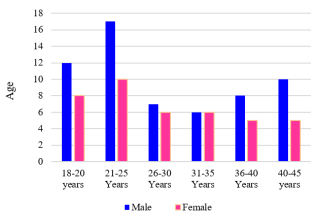
Figure 1. Age & Gender Classification.
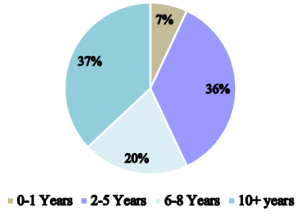
Figure 2. Playing Experience.
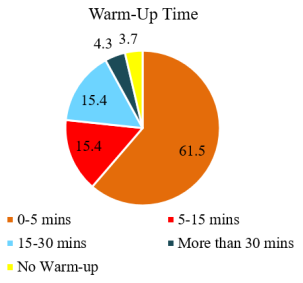
Figure 3. Warm time of Players earlie. r.
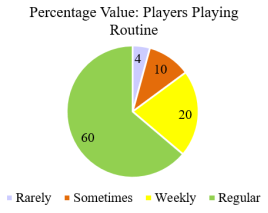
Figure 4. Players playing Routine.
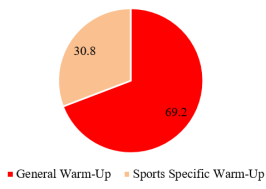
Figure 5. Players Preference on General Vs Sports Specific Warm-Up.
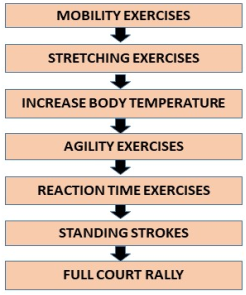
Figure 6. Flow chart for warm-up exercises.
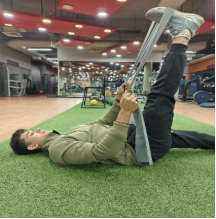
Figure 7. Mobility exercise.
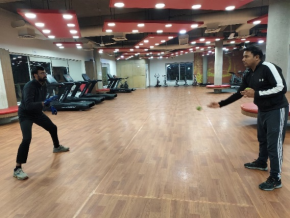
Figure 8. Reaction Time Exercise.
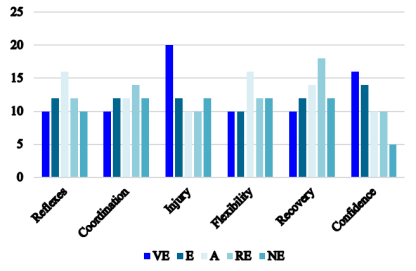
Figure 9. Component Comparison for Male Players.
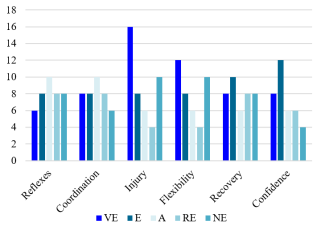
Figure 10. Component Comparison for female Players.
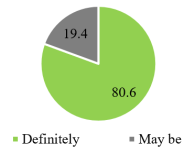
Figure 11. Players interest in learning new was of Warm-up techniques.
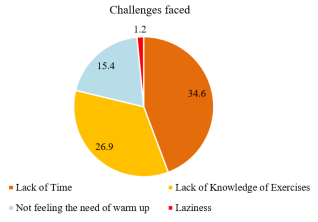
Figure 12. Challenges Faced in a consistent warm-up routine.




 Share This Article
 Twitter
 Linked In
 Facebook
 Copy
Copy Download